Blog Articles
Taking Time to Process
By Dr. Bryan Smith
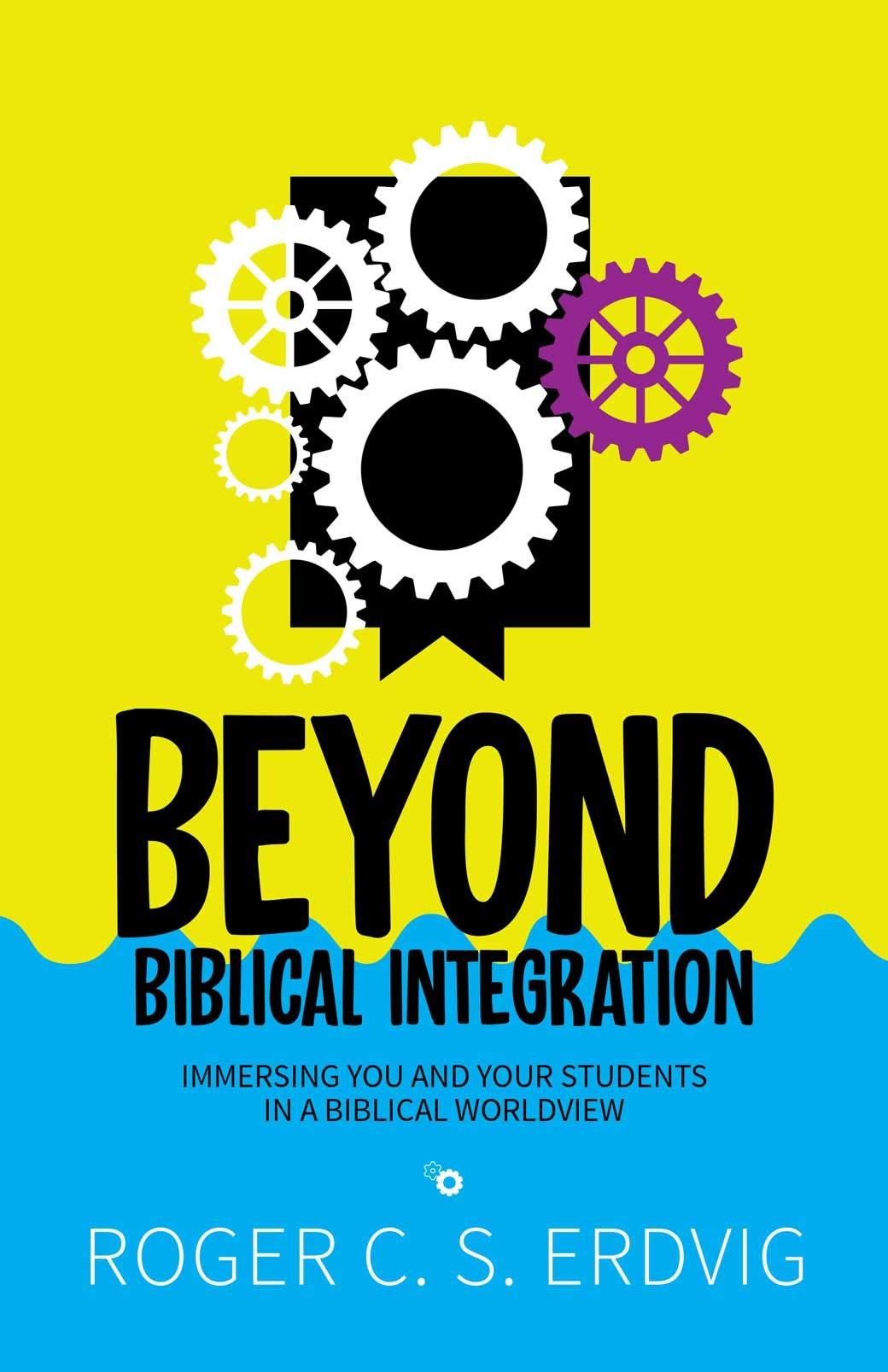
If you’re involved in Christian education, I have a book recommendation for you: Beyond Biblical Integration by Roger Erdvig.[1] The book is filled with practical advice on how to shape the lives of young people with a biblical worldview.
Erdvig’s perspective is informed by years of experience in Christian schools and by research. It’s based on doctoral research he did with a group of Christian young adults. They were 18- to 23-year-olds who had demonstrated a strong commitment to a biblical worldview. The purpose of his study was to discern the pathway that led these young people to become “exemplary Christian emerging adults.”[2]
I’ve read Erdvig’s book several times since it came out in 2020. What I find most helpful about it is his emphasis on processing. A key ingredient in developing a biblical worldview is providing young people with ample opportunities to process what they are learning.
Here’s a sad truth that’s hard for us educators to face: learning experiences may not produce much learning. We work hard to engage young people in rich learning experiences: reading books that matter, solving real-world problems with math, conducting a science lab, taking a trip to a natural history museum, and putting on a school play. But Erdvig warns that such experiences may just be things that happen to our young people rather than things that happen in them. For experiences to penetrate deeply into their hearts and minds, students need to examine, evaluate, and respond to them.
Erdvig defines processing as “reflecting on an experience to understand it, assign meaning to it, and respond appropriately with affirmed, modified, or new desires, ideas, or actions.”[3] Erdvig says the exemplary emerging adults in his study regularly did those things. When they had new experiences—especially worldview-rich ones—they tried to process them.
Erdvig highlights three ways they did this. First, they engaged in conversations with peers. They knew how to talk with a friend and learn from their experiences so they could better understand their own. Second, they were committed to the discipline of reflection. They were not satisfied with easy answers to hard questions; when they had a difficult or troubling experience, they would turn it over in their minds again and again, attempting to relate it to biblical teaching. Third, they sought opportunities to apply their experiences in serving others. Erdvig’s exemplary young adults had a heart for ministry: they wanted to use their understanding of a biblical worldview in service to others.
For me, the key insight of the book was his emphasis on these three ways of processing. Why do I say that? Because schools can be very good at helping students do these things. In fact, there are teaching strategies associated with each of them.
Conversations with Peers
Teachers on every level can train students to have productive conversations with peers by regularly engaging them in think-pair-share activities. Perhaps the class is learning about the Indian Removal Act of 1830 and how it led to the Trail of Tears. At a key moment in the instruction, the teacher could give the students the following prompt: “How do Genesis 1:27 and Mark 12:31 help me know what to think about the Indian Removal Act?” First, each student should think about how he or she would answer the question, look up the verses, and jot down proposed answers. Second, the teacher can ask students to pair up with another student in the class. Together, the students compare their answers, ask questions, challenge one another, and then refine their answers. Third, the teacher can invite each pair to share their answers with the rest of the class.
As students go through think-pair-share activities, they learn how valuable conversation can be for refining their answers to worldview-rich questions. Additionally, with the help of a skilled teacher, they may become good conversation partners over time.
Reflection
Erdvig says teachers can help students learn to reflect on key worldview ideas by using the DEAL acronym.[4] First, a student should describe (D) an experience. Second, the student should be instructed to examine or evaluate (E) that experience (often by using biblical teaching as the authoritative standard). Third, the student should have an opportunity to articulate (AL) what he or she has learned through this experience.
Suppose a class goes on a field trip to the local planetarium. The students enjoy the stunning images of distant stars. But the teacher can tell that they seem puzzled by the director’s comments about the age of the universe. When the students return to school, the teacher gives them this prompt: “Was there anything that bothered you about our trip to the planetarium today?” First, each student could be asked to write down, as objectively as possible, an account of what was troubling (D). Second, the teacher might instruct each student to write an evaluation of what happened using what they know from the Bible (E). Third, each student could be asked to state how old they think the universe is and why (AL). The teacher may then ask students to share their answers to these questions, providing additional instruction as needed.
Teachers who show students how to reflect on their experiences—the troubling ones as well as the enjoyable ones—are developing young people who are resilient in the face of contrary worldview claims. Such students will be able to learn from Christians and non-Christians alike.
Serving Others
Christian education should make regular use of service learning. Service learning refers to experiences that require students to apply their knowledge to meet the needs of others. A key element of a biblical worldview is the teaching that we are to love our neighbors as ourselves. As we serve others with our learning, we reckon with a fundamental component of a biblical worldview.
Math students can use arithmetic to make brownies and cookies, sell them at a bake sale, and then give the money they earn to support some ministry endeavor. Biology students can take what they are learning about DNA replication and cell division and use it to explain to elementary science students why it is unreasonable to claim that life has come about by chance. And Spanish students can use what they are learning to have conversations with Spanish speakers in a nursing home.
As young people use their knowledge to serve others, they learn a valuable lesson: education is not a series of hoops you jump through to get into the college of your choice; it’s how you get equipped for service to others. And there’s an additional benefit: when you use your learning to help someone, that learning gets inside you. It’s not something you spit out on a test and then forget. It’s learning for life.
The key elements of a biblical worldview are big ideas that make huge claims about all of life. These ideas are exceedingly powerful, but they will likely seem unremarkable so long as our young people don’t take time to examine them and meditate on them. If, however, we give our young people opportunities to process, as Roger Erdvig invites us to do, these ideas may take firm hold and bear fruit.
Dr. Bryan Smith has worked in Christian education for over thirty years. He has been a classroom teacher as well as a textbook author. Currently, Bryan serves as the Director of Biblical Worldview at BJU Press. He and his wife, Becky, have six children.
ENDNOTES
1. Roger C. S. Erdvig, Beyond Biblical Integration (Manitou Springs, CO: Summit Ministries, 2020).
2. Ibid., 14.
3. Ibid., 93-94.
4. Ibid., 151-57. Erdvig attributes this strategy to S.L. Ash and P.H. Clayton, “Generating, Deepening, and Documenting Learning: The Power of Critical Reflection in Applied Learning,” Journal of Applied Learning in Higher Education (2009), 1:25-48.